If you’ve ever tried making salsa in a blender and ended up with tomato soup… or tried blending a smoothie in a food processor and got chunky sadness… yeah. Same energy, different tools.
They overlap just enough to confuse people, but in real kitchen life, they’re built for different jobs. Here’s a practical, experience-based guide (no product picks, no links) to help you buy the one you’ll actually use.
The Core Difference (Plain English)
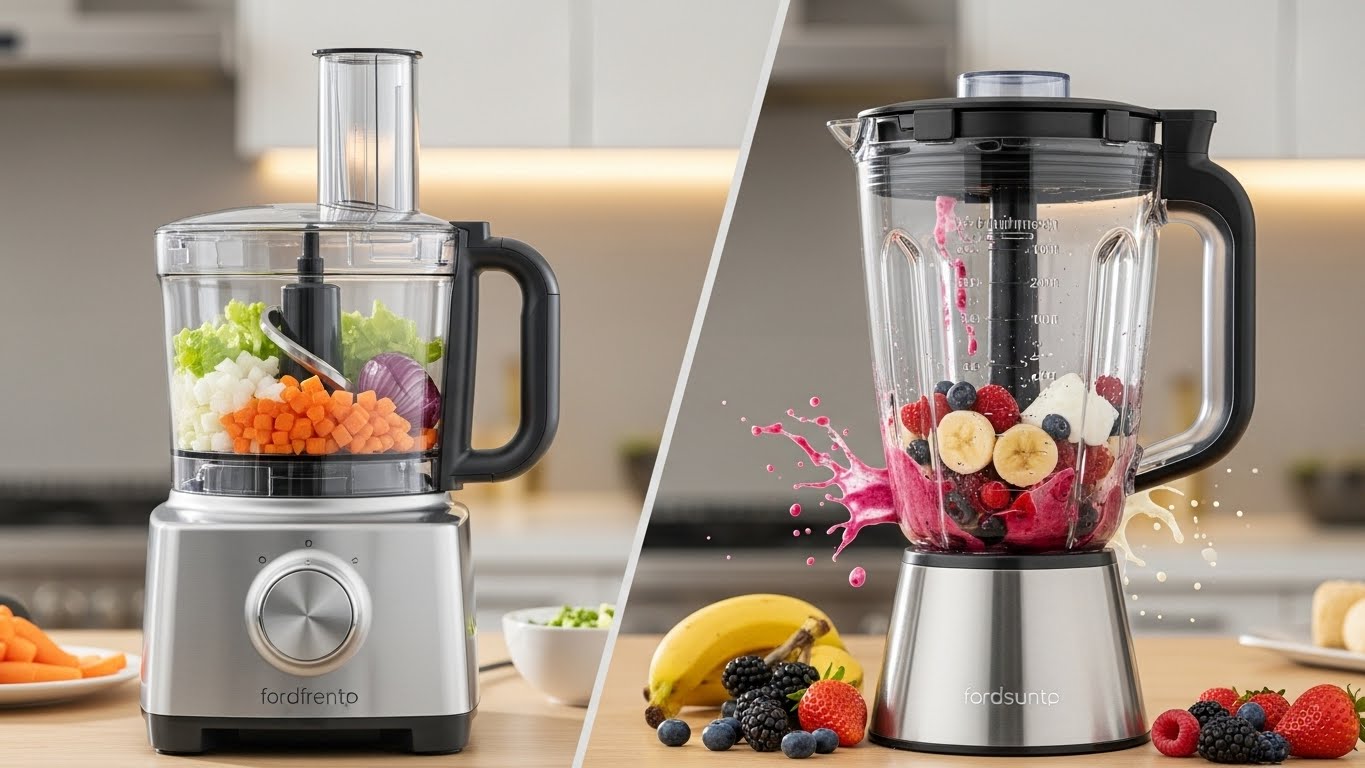
Blender = liquids + smooth textures
Blenders work best when there’s enough liquid to create a vortex that pulls food down into the blades.
Think: smoothies, soups, sauces you want silky, protein shakes.
Food processor = solids + controlled texture
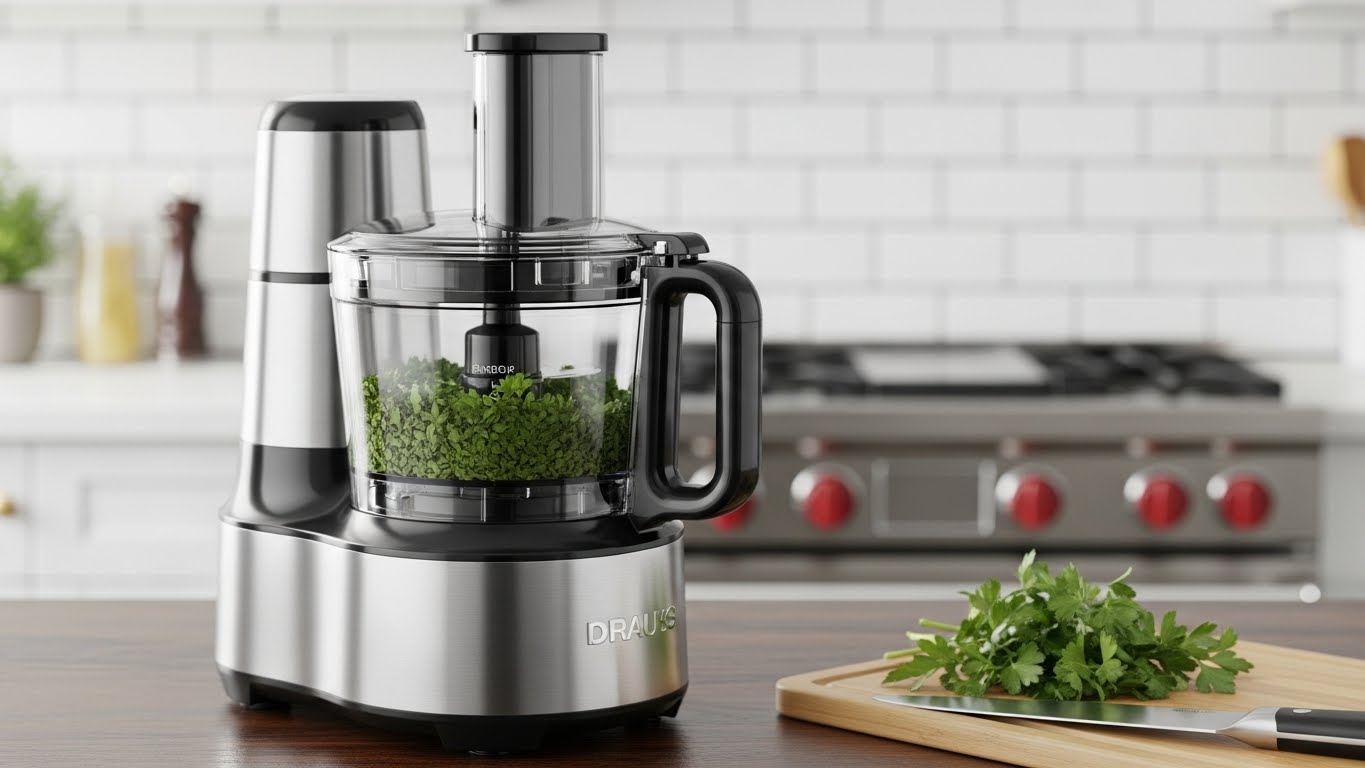
Food processors are better at chopping and mixing without needing much (or any) liquid.
Think: salsa, pesto, shredded cheese, pie crust, coleslaw, hummus texture you can control.
That’s the real dividing line:
If you want it drinkable or silky → blender.
If you want it chopped, shredded, or mixed → food processor.
When You Should Buy a Blender
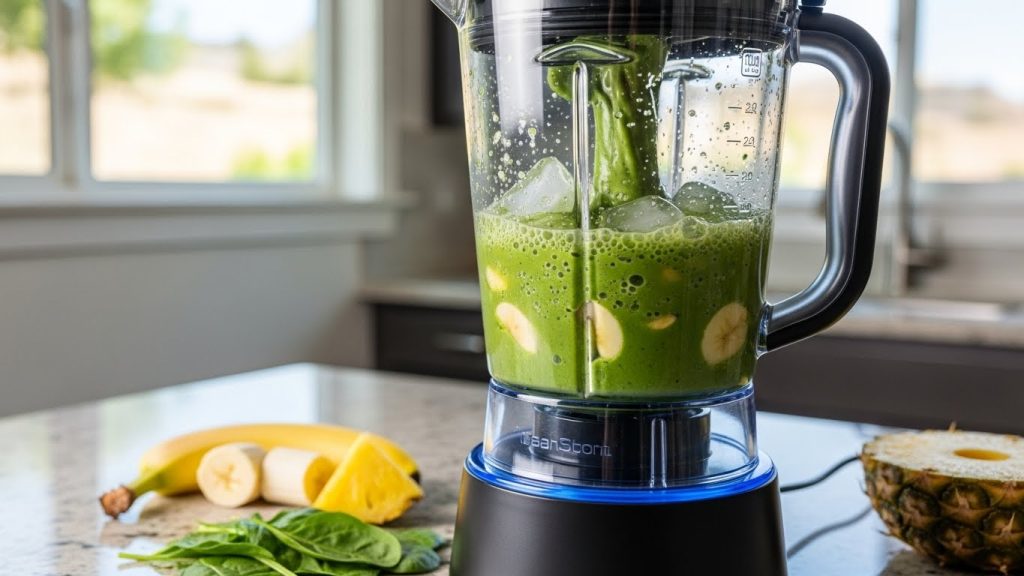
1) You make smoothies or protein shakes often
This is the most obvious one. If smoothies are in your weekly routine, a blender is the easiest win.
Real-life note: A good blender handles frozen fruit better and gives you a smoother texture without leaving icy chunks.
2) You love creamy soups
Blenders make soups silky (tomato, squash, broccoli, etc.). You can also blend sauces smooth without needing extra steps.
3) You want sauces that are smooth, not chunky
If you want:
- super smooth salsa verde
- creamy dressing
- smooth marinades
…blender.
4) You want fast cleanup (sometimes)
Many people find blenders quicker for rinse-and-go jobs, especially if you blend liquids right away and rinse immediately.
Downside: Sticky smoothies can be annoying if you let them sit.
When You Should Buy a Food Processor
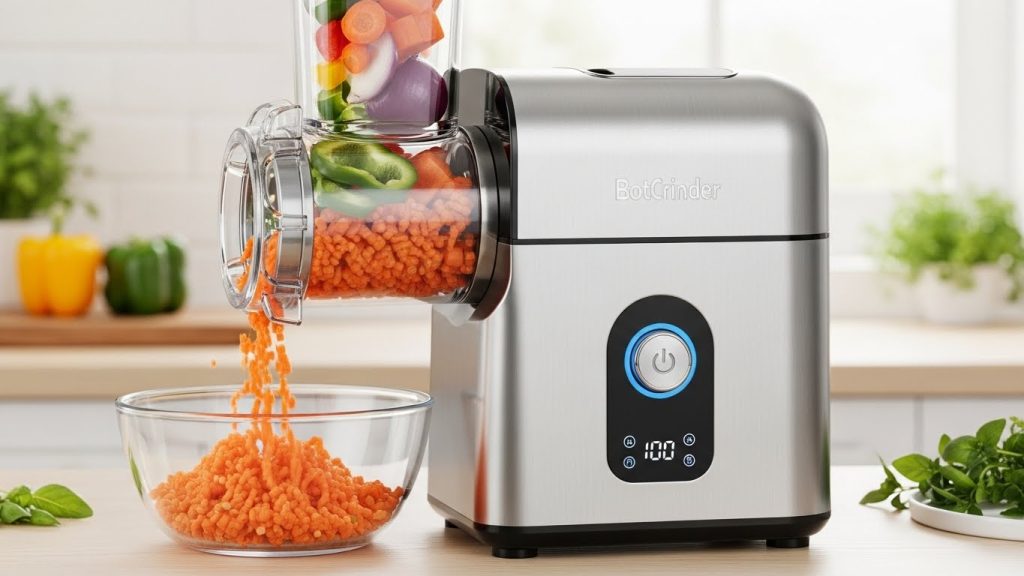
1) You prep ingredients (chop, slice, shred)
If you cook at home a lot, a food processor is a time saver for:
- onions, garlic, herbs (chop)
- cucumbers/cabbage (slice)
- cheese/carrots (shred)
Real-life note: If you hate chopping onions, this alone can justify it.
2) You want “chunk control”
A processor is king for textures like:
- chunky salsa
- pesto (not emulsified into a paste)
- chopped nuts
- cauliflower rice
Blenders tend to overdo it fast.
3) You bake or make dough
Food processors shine for:
- pie crust
- biscuit dough
- quick dough mixing
A blender isn’t designed for this.
4) You make dips that need body
Hummus, bean dips, thicker spreads—processors often handle thick mixtures better without needing extra liquid.
Side-by-Side: What They’re Best At
Blender wins for:
- Smoothies, shakes
- Pureed soups
- Smooth sauces/dressings
- Crushing ice (depending on power)
- Anything that needs a “silky” finish
Food processor wins for:
- Chopping/slicing/shredding
- Salsa with texture
- Pesto
- Dough and baking prep
- Thick dips and spreads
The “I Tried It and Regretted It” Section
Trying to replace a blender with a food processor
You can make smoothies in a processor, but they’re often:
- less smooth
- more work (scraping sides)
- harder to get that drinkable texture without adding too much liquid
Trying to replace a processor with a blender
You can chop in a blender, but:
- it’s uneven (some pieces dust, some chunks)
- you have to stop and shake it
- it can quickly turn chunky foods into puree
If you make salsa, coleslaw, or shredded cheese often, a blender will frustrate you.
Which One Fits Your Routine? (Quick Decision Guide)
Choose a blender if:
- You drink smoothies/shakes 3+ times a week
- You want creamy soups and silky sauces
- You don’t do a lot of chopping or shredding
- You prefer “pour and go” recipes
Choose a food processor if:
- You cook meals often and prep ingredients
- You want chopped texture (salsa, pesto, slaws)
- You bake occasionally (dough/crust)
- You want to shred/slice without doing it by hand
Consider both if:
- You cook a lot and also drink smoothies regularly
- You meal prep, bake, and do sauces/soups weekly
- You have the counter/storage space
My Honest “If You’re Only Buying One” Recommendation
For most busy households:
Food processor tends to get used more over time, because chopping and shredding show up in everyday cooking.
For smoothie people:
If smoothies are your daily habit, blender first—because you’ll actually use it consistently.
Capacity & Storage (The Practical Part)
Before you pick, think about:
- Counter space: processors tend to be wider; blenders are taller.
- Cleaning: processors have more parts (lid, bowl, blade, disc).
- Noise: both can be loud, but processors can be less “high-pitched” than blenders.
If you hate washing extra parts, that might steer you toward a blender. If you hate chopping, that might steer you toward a processor.
FAQ
Can a blender replace a food processor?
Only if you don’t care about texture and you don’t need slicing/shredding. For real meal prep, not really.
Can a food processor replace a blender?
Not well for smoothies and silky soups. It can do it, but it’s usually not as smooth or convenient.
What if I mostly cook simple meals?
If your cooking is basic and you don’t chop a lot, a blender may be enough. If you do any regular meal prep, a processor makes life easier.