If your coffee at home sometimes tastes bitter, sour, watery, or just “meh,” you don’t need expensive gear—you need a simple system. “Dialing in” sounds fancy, but it’s really just making one change at a time until your cup tastes right.
This guide is built for beginners and busy people: easy steps, practical defaults, and quick fixes.
Good coffee isn’t complicated—it’s consistent.
Once you control grind size, water, and ratio, your coffee starts tasting smoother and sweeter almost immediately.
Here’s the beginner-friendly way to get there without obsessing.
What “Dialing In” Actually Means
Dialing in = adjusting a few variables so your coffee hits the balance you like:
- Sweet and smooth (balanced extraction)
- Not sour (under-extracted)
- Not bitter/dry (over-extracted)
You’re not chasing perfection—you’re aiming for repeatable “pretty great.”
Step-by-Step Setup (Do This First)
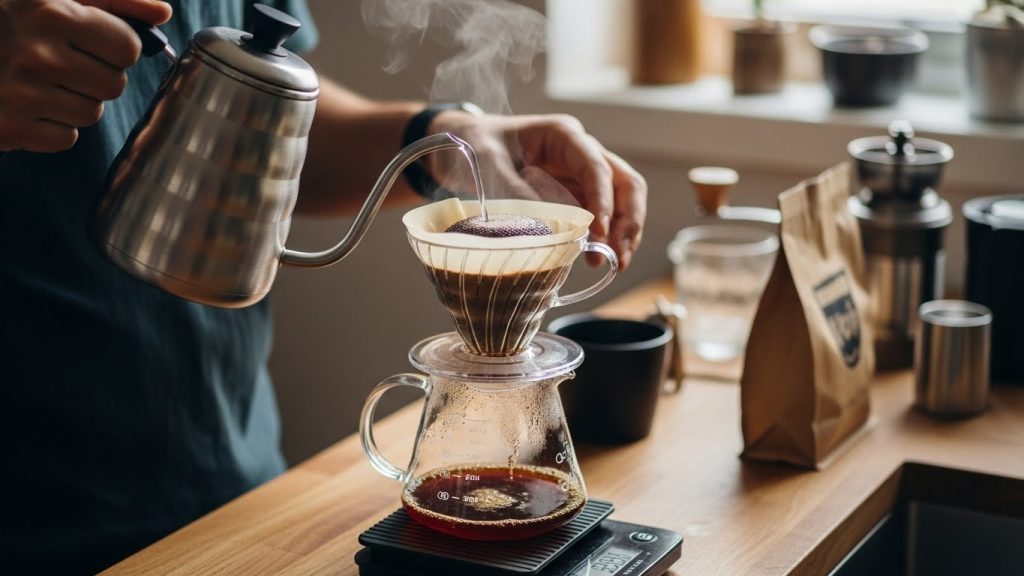
Step 1: Pick ONE brew method and stick with it for a week
Choose the method you use most:
- Drip machine
- Pour-over
- French press
- AeroPress
- Cold brew
Why: If you switch methods daily, you’ll never know what change helped.
Step 2: Use a simple coffee-to-water ratio
This is the fastest upgrade for most beginners.
Easy default ratios
- Drip / Pour-over: 1:16 (example: 20g coffee to 320g water)
- French press: 1:15 (example: 30g coffee to 450g water)
- Stronger coffee: 1:15
- Milder coffee: 1:17
No scale? Use this approximate shortcut:
- Start with 2 tablespoons of coffee per 6 oz water, then adjust by taste.
(Scales are more consistent, but you can still improve a lot without one.)
Step 3: Use the right grind size (starting points)
Grind size is the #1 taste control for most people.
Beginner starting points
- Drip machine: medium (like sand)
- Pour-over: medium-fine (slightly finer than drip)
- French press: coarse (like sea salt)
- AeroPress: medium-fine (then adjust)
- Cold brew: extra coarse
Most common mistake: Grinding too fine for drip → bitter and harsh.
Step 4: Use better water (this one matters more than people think)
If your tap water tastes weird, your coffee will too.
Beginner-friendly rule
- Use filtered water if possible.
- If your water is very hard (lots of minerals), coffee can taste dull or chalky.
- If your water is very soft, coffee can taste flat.
You don’t need fancy water—just avoid “bad-tasting water.”
Step 5: Hit a safe temperature range
- For most hot coffee: 195–205°F
- If your coffee is bitter: try slightly cooler (190–195°F)
- If it’s sour: try hotter (200–205°F)
No thermometer? Bring water to a boil, then wait 30–60 seconds.
The “Taste Fix” Map (Fast Troubleshooting)
This is the section I wish I had early on.
If coffee tastes sour, sharp, or “thin”
That’s usually under-extraction.
Try ONE change:
- Grind finer
- Brew longer (slower pour, longer steep)
- Use hotter water
- Slightly increase coffee dose (stronger ratio)
If coffee tastes bitter, dry, or “burnt”
That’s usually over-extraction (or stale coffee / dirty gear).
Try ONE change:
- Grind coarser
- Brew shorter (faster flow, shorter steep)
- Use slightly cooler water
- Check if you’re using very dark roast (it can taste bitter at high temps)
If coffee tastes watery
That’s usually too little coffee or too coarse a grind.
Try:
- Use more coffee (move from 1:17 to 1:15–1:16)
- Grind slightly finer
If coffee tastes “muddy” or gritty
Usually too fine for your method (especially French press) or lots of fines.
Try:
- Grind coarser
- Pour gently / avoid agitation
- If using press, let it settle before plunging
Method-Specific Mini Guides (Beginner Defaults)
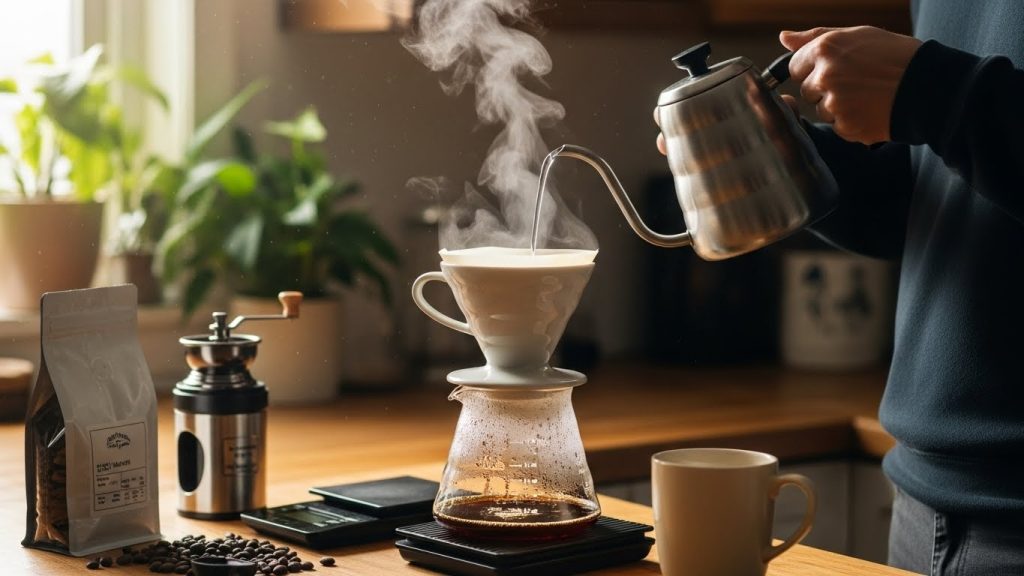
Drip Coffee Maker (quick improvement checklist)
- Ratio: 1:16
- Grind: medium
- Water: filtered if possible
- Clean machine monthly (descale)
My experience: Most drip bitterness is from grinding too fine or a dirty machine.
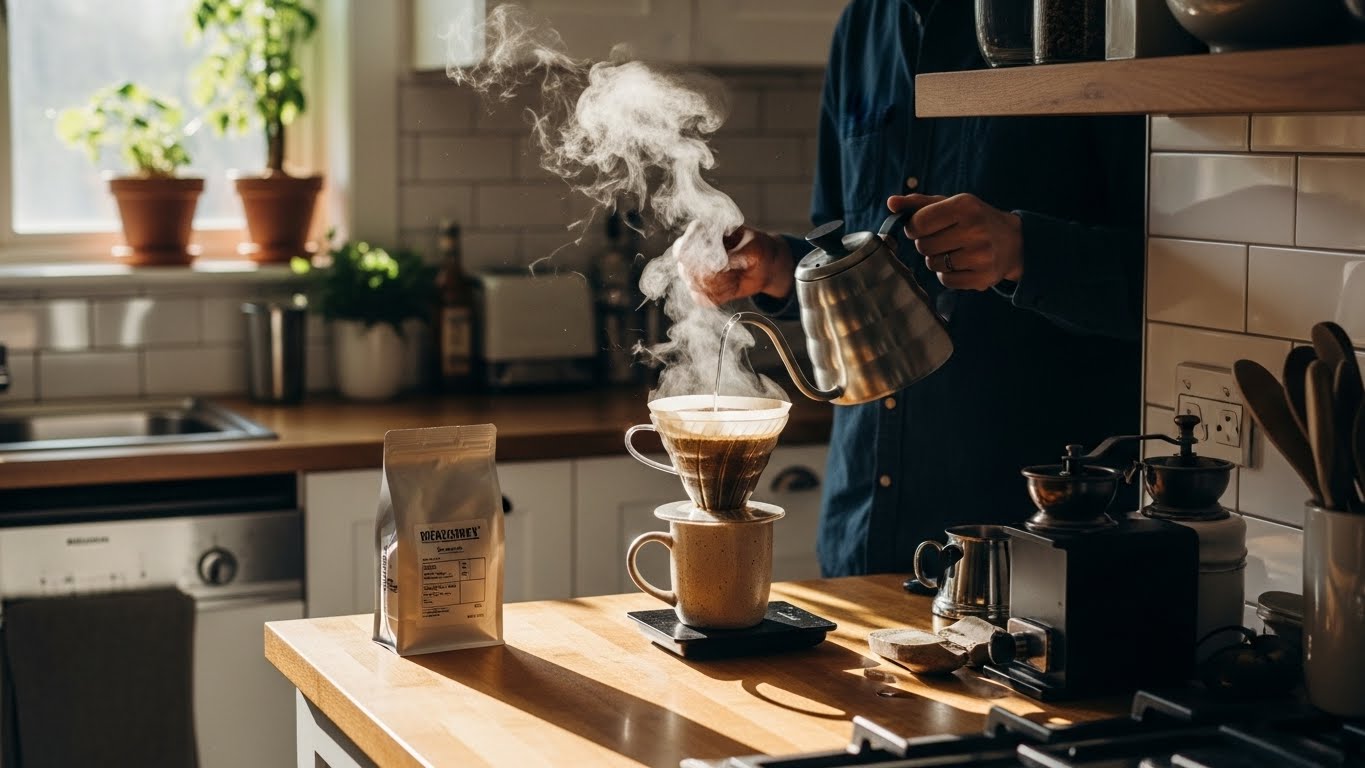
Pour-Over (simple approach that works)
- Ratio: 1:16
- Grind: medium-fine
- Pour slowly in circles, keep the bed even
- Total brew time: often 2:30–3:30 depending on dripper size
Common mistake: pouring too aggressively → channels water and tastes uneven.
French Press (smooth and forgiving)
- Ratio: 1:15
- Grind: coarse
- Steep: 4 minutes
- Plunge slowly, then pour immediately
Common mistake: leaving coffee sitting in the press → gets bitter fast.
AeroPress (easy and adjustable)
- Ratio: 1:12 to 1:16 depending on strength preference
- Grind: medium-fine
- Steep: 1–2 minutes
- Press gently
Tip: Great method for beginners because it’s hard to ruin completely.
Cleanliness: The “Invisible” Flavor Killer
Old coffee oils make fresh coffee taste stale and bitter.
Quick routine
- Rinse your brewer after each use
- Once a week: wash carafe/parts with warm soapy water
- Once a month (or when needed): descale kettle/drip machine
If your coffee suddenly tastes worse and you changed nothing else—cleaning is usually the fix.
A Beginner “Dial-In Plan” You Can Follow
If you want a simple week plan:
Day 1: Set ratio (start 1:16)
Day 2: Adjust grind based on taste
Day 3: Adjust temperature slightly
Day 4: Try a small ratio tweak (1:15 stronger / 1:17 milder)
Day 5: Repeat your best combo and lock it in
Rule: Only change one thing per day.
My Honest “Shortcut” Tips (What Works Fast)
- If coffee is bitter: grind coarser before anything else
- If coffee is sour: grind finer first
- If coffee is flat: check water + freshness
- If coffee is inconsistent: you need a more consistent grinder (or simpler method)
FAQ
Do I need a scale to make good coffee?
No—but a scale makes good coffee repeatable. If you want one upgrade, it’s the easiest.
How fresh should beans be?
Best flavor is often within a few weeks of roast, but the bigger rule is: store them airtight and away from heat/light.
Why does my coffee taste different day to day?
Usually grind inconsistency, uneven pouring, changing water temperature, or old oils in equipment.